


Course structure and content
The MA Conservation: Collection Care & Management combines practical training in preventive conservation with applied research, critical enquiry and professional development.
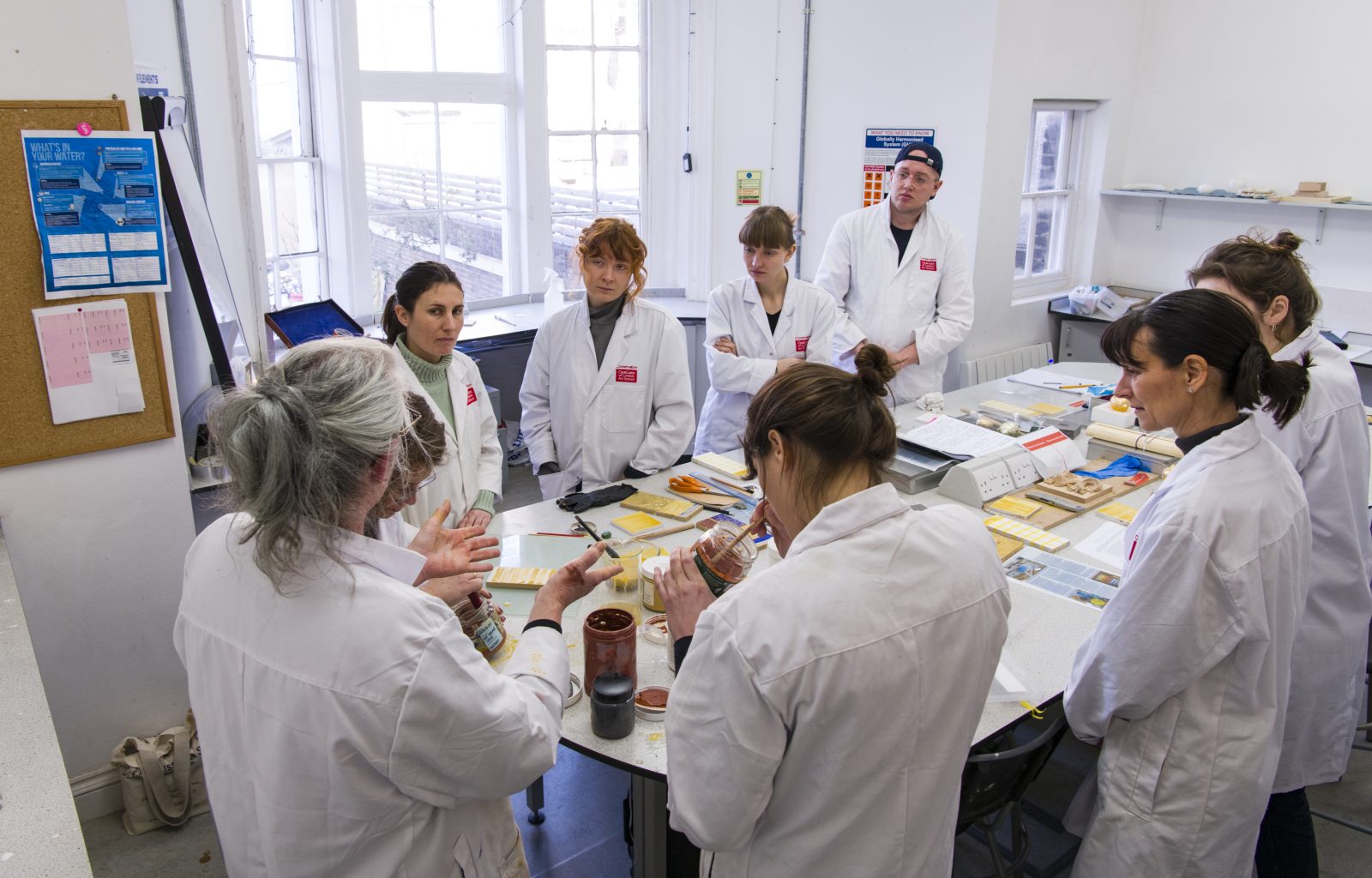
Teaching includes specialist demonstrations, practical workshops, seminars, case studies, institutional visits, tutorials, research activities and independent study.
The course is organised into three 60-credit units, supporting your progression from the investigation of materials and methods through applied collection care practice to critical evaluation and professional development.
Unit 1: Methods
Investigating materials, environments and conservation approaches
You’ll establish a foundation in the principles and methods of preventive conservation, investigating how materials, environmental conditions and deterioration processes influence the care of cultural heritage.
Through practical workshops, research and case-based learning, you’ll explore approaches to condition assessment, documentation, environmental monitoring and the identification of risks affecting collections.
You’ll also investigate the historical, theoretical and ethical contexts of conservation, developing the research and analytical skills required for postgraduate study.
The emphasis is on enquiry, methodological testing and critical understanding, enabling you to evaluate different approaches and establish a considered direction for your work.
Unit 2: Practices
Applying collection care knowledge and developing professional judgement
Building on your research and technical understanding, you’ll investigate practical approaches to the care, management and preservation of cultural heritage collections.
Through applied research, practical exercises and case studies, you’ll develop your ability to assess collection care challenges, evaluate risks and propose appropriate strategies for preservation and management.
Your work may address areas such as environmental control, handling and storage, documentation systems, emergency planning and sustainable collection care.
You’ll consider how technical decisions respond to the needs of particular objects, collections and institutions, developing a body of work that demonstrates informed judgement, practical competence and critical engagement.
The unit also includes participation in the MA Show, where you’ll present aspects of your collection care practice and research to a public audience. The format of your presentation will reflect the nature of your work and may include practical outcomes, research documentation or visual presentations of your investigations and findings.
Unit 3: Professions
Critical reflection and professional development
You’ll critically evaluate your research and practical work, considering the relationship between collection care methodologies, institutional responsibilities and contemporary professional practice.
Through advanced research, writing and professional development activities, you’ll investigate current debates in preventive conservation and collections management, including sustainability, access, ethical responsibility and the changing priorities of heritage organisations.
You’ll strengthen your ability to communicate collection care strategies to specialist and wider audiences, reflecting on how your knowledge and skills can contribute to the future of the sector.
The unit culminates in a Critical Practice Event, where you’ll present your research, reflect on your development and articulate future professional directions.
Practice Web Archive
Throughout the MA, you’ll develop a Practice Web Archive: a digital record of your practical work, research and critical reflection.
You’ll use the archive to document investigations, practical exercises, condition assessments, risk analyses, collection care proposals and research findings.
It forms an important part of your learning and assessment, providing evidence of your developing technical understanding, research skills and professional judgement across the three units.
Full-time and part-time study
You can study MA Conservation: Collection Care & Management full-time over one year or part-time over two years. Both routes combine scheduled teaching and specialist supervision with independent practical work and research.
Full-time study
You’ll be expected to commit five days a week to your MA, combining practical work, research and independent study with scheduled teaching and supervision.
Part-time study
You’ll be expected to commit three days a week to your MA, combining scheduled teaching and specialist supervision with independent practical work and research.
Teaching arrangements
Graduate School teaching is generally scheduled between Monday and Wednesday, including shared postgraduate seminars and cross-course activities.
Specialist conservation teaching, practical supervision and project-based sessions may also be arranged at other times, depending on the requirements of your work and the availability of specialist tutors.
Your individual timetable and access arrangements will be confirmed by the course team.
Attendance and engagement
Scheduled teaching and supervision vary according to the stage of the course and the requirements of your work. Attendance at all scheduled sessions is expected, alongside sustained independent research and practical engagement throughout your study week.
Assessment and feedback
Assessment combines practical exercises, research, professional documentation, written submissions, critical reflection and presentations, according to the requirements of each unit.
You’ll develop a portfolio of collection care work and research demonstrating your practical knowledge, analytical skills, ethical awareness and ability to propose informed conservation strategies.
You’ll receive feedback through tutorials, practical supervision, group discussions and progress reviews, supporting your technical and intellectual development.
Your Practice Web Archive supports assessment by documenting your research, practical investigations, decision-making and critical reflection throughout the course.